
TLDR
- A CRM for inside sales records what happened, but it rarely helps reps decide what to do next
- Most CRM inside sales setups fail because reps see data entry as admin, not as a tool for selling
- Inside sales teams need more than a CRM: content, buyer engagement data, mutual action plans and coaching connected to every deal
- The 5 reasons in this guide explain why CRM inside sales workflows stall, and what to layer on top
- Puller sits alongside your CRM, finding leads, personalising sales rooms, aligning buyers on next steps and coaching reps in real time
Every inside sales team has a CRM. Very few inside sales teams love their CRM.
Reps see it as admin. Managers see it as the only source of truth they have, even though they know half the data is out of date. Leadership sees a dashboard that tells them what happened last month but nothing about what’s going to happen this month.
The problem isn’t the CRM. The problem is expecting a system of record to act as a system of action. A CRM tells you a deal exists. It doesn’t help your inside sales rep win it.
According to HubSpot’s State of Sales research, sales reps spend a large share of their week on non-selling tasks, and CRM admin is consistently one of the biggest drains.
If you’ve already read our breakdown of what the best managers in sales do differently, you’ll recognise the pattern. The teams that perform best build systems that help reps act, not just log.
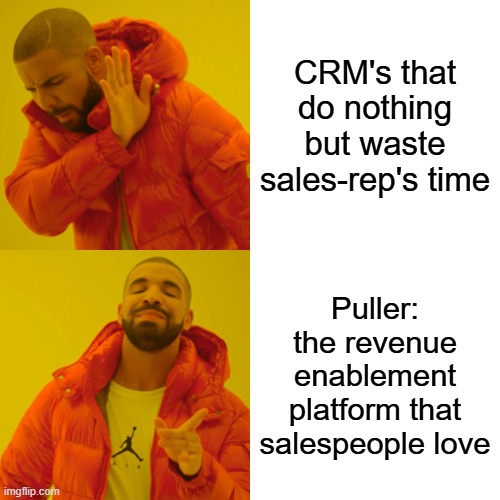
Your CRM tracks deals. Puller helps your reps close them.
Puller works alongside your CRM: AI lead discovery, personalised sales rooms, mutual action plans and real-time coaching for inside sales teams.
Get started at getpuller.com — $50/user/month.
5 Reasons Your CRM Inside Sales Setup Isn’t Helping Reps Close
1. Your CRM Inside Sales Workflow Is Built for Reporting, Not Selling
Most CRM inside sales setups were designed around what managers need to report on, not what reps need to sell. Fields, stages and mandatory notes exist so the forecast can be built. None of them tells a rep what to send a buyer next, or when.
The result is a rep who updates the CRM after the call because they have to, then opens a separate folder to find content, a separate email client to follow up, and their own memory to decide what to say. Your inside sales team needs the selling layer that sits on top of the record.
2. Your CRM Has No Idea What the Buyer Is Doing
A CRM knows the deal is in “Proposal Sent.” It doesn’t know the buyer opened the proposal four times, spent most of that time on pricing, and forwarded it to a colleague yesterday.
That buyer engagement data is the most valuable signal an inside sales rep can have. It tells them exactly when to follow up and what to say. When proposals live inside a digital sales room, every buyer action becomes visible. Your inside sales reps stop chasing on a schedule and start following up on signals.
3. Your CRM Shows a Stage, Not a Plan
“Negotiation” in your CRM tells you where a deal sits. It doesn’t tell anyone what has to happen next, who owns it, or when it’s due. That gap is why so many inside sales deals stall in the final stretch.
A mutual action plan fixes it. Inside the sales room, the rep and buyer agree on concrete next steps: security review by Tuesday, pricing sign-off from finance by Friday, contract signature the week after. Both sides can see the plan and hold each other to it. Your CRM inside sales pipeline stops being a list of hopeful stages and becomes a set of committed timelines.
According to Gong’s research on deal execution, deals with clear, shared next steps move faster and slip less than deals where next steps live only in a rep’s notes.
4. Your CRM Doesn’t Coach Anyone
A CRM can tell a manager that a rep’s conversion rate dropped. It can’t tell the rep how to handle the pricing objection they’re about to face on their next call.
Inside sales teams live on volume. Reps take many calls a day, and a manager can only listen to a few. Real-time AI coaching gives every rep objection handling and pitch guidance during the call, without a manager in the room. Read more in AI Sales Coaching — 5 Ways It Helps B2B Reps Close Faster.
5. Your CRM Inside Sales Pipeline Depends on Leads Nobody Is Finding
A CRM stores leads. It doesn’t find them. Most inside sales teams depend on whatever marketing hands over, plus manual prospecting that eats into selling time.
An always-on lead engine that searches for prospects matching your ICP keeps the top of the inside sales pipeline full without reps spending half their day on research. Those leads flow straight into personalised sales rooms, ready to be worked. We cover more ways to fill the top of the funnel in Generate B2B Leads — 7 Brutal Strategies That Actually Fill Your Pipeline.
How Puller Works With Your CRM
Puller doesn’t replace your CRM. It adds the selling layer your CRM inside sales setup is missing.
An always-on lead engine finds relevant prospects. Canvas creates on-brand content for every buyer. Personalised sales rooms show your inside sales reps exactly how each buyer engages. Mutual action plans keep both sides aligned on next steps, owners and deadlines. And opt-in live AI coaching helps every rep handle objections during the call. Your CRM stays the record. Puller becomes how your team actually sells.
Give your inside sales team the selling layer their CRM is missing.
Get started at getpuller.com — $50/user/month, no hidden fees.
Also worth reading: